


Beverly Hills executive office furniture prices and discounts
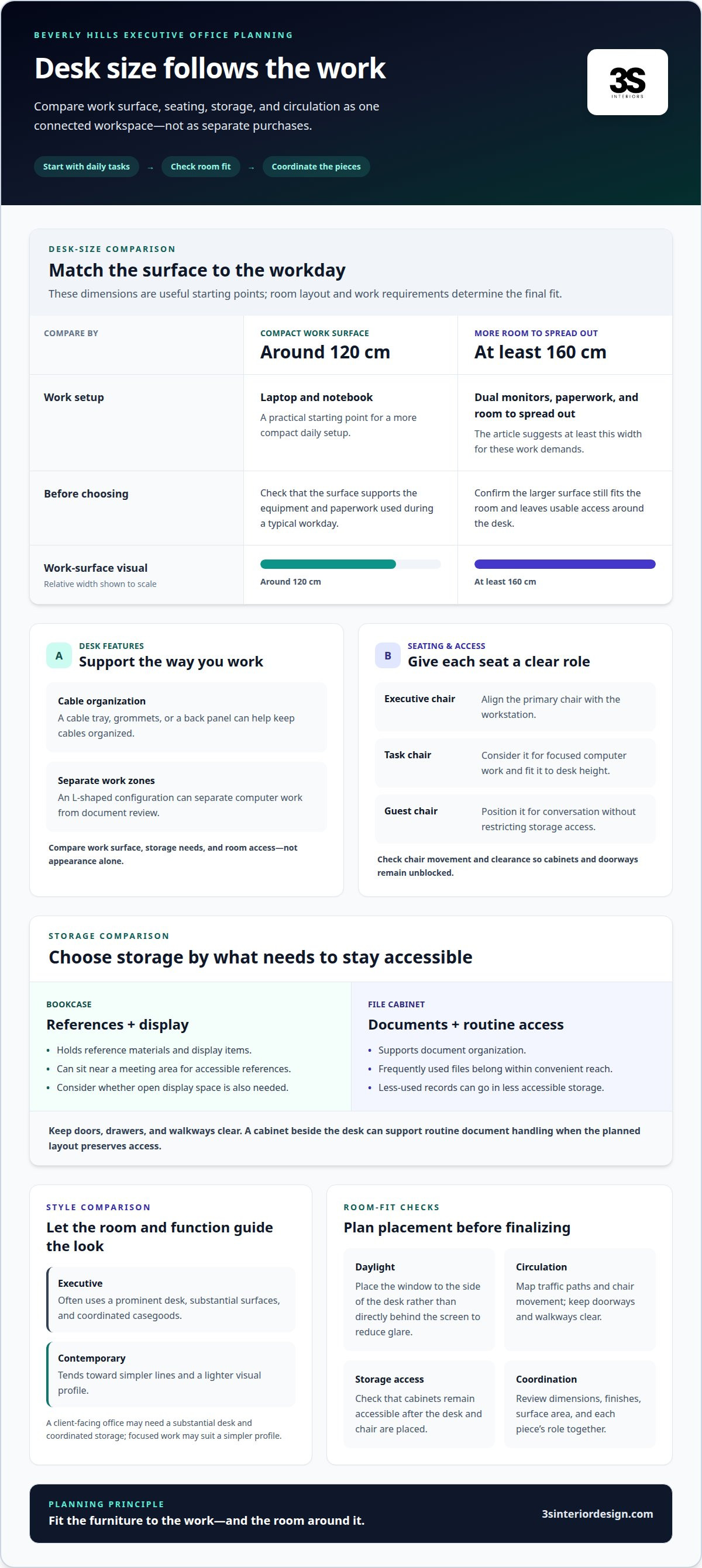
A larger executive desk isn’t automatically the right desk. The best Beverly Hills executive office furniture choices match the work being done, the room available, and the storage and seating the office needs. Desk size and layout should support daily tasks without compromising movement through the space.
For an executive office, appearance matters, but so do comfort, organization, and efficient use of space. This guide explains how desk and chair choices, executive and contemporary styles, storage, and room measurements shape a practical selection. Pricing depends on the project and is provided after a quote request; furniture choices, storage needs, materials, and project scope all affect cost. You’ll also learn to assess discounts in context, so a lower price doesn’t outweigh fit and function.
Table of Contents
Executive and contemporary styles
For Beverly Hills executive office furniture, start with the work, then choose a style that supports it. A client-facing office may need a substantial desk and coordinated storage. A leadership workspace used mainly for focused tasks may suit a simpler profile with fewer visual elements. In either case, the furniture should fit the room and its day-to-day needs.
Businesses furnishing an office in Beverly Hills can work with a commercial office furniture supplier. A considered selection connects desk style, seating, storage, and room layout rather than treating each piece as a separate decision. This helps create a consistent workspace for executives, visitors, and staff.
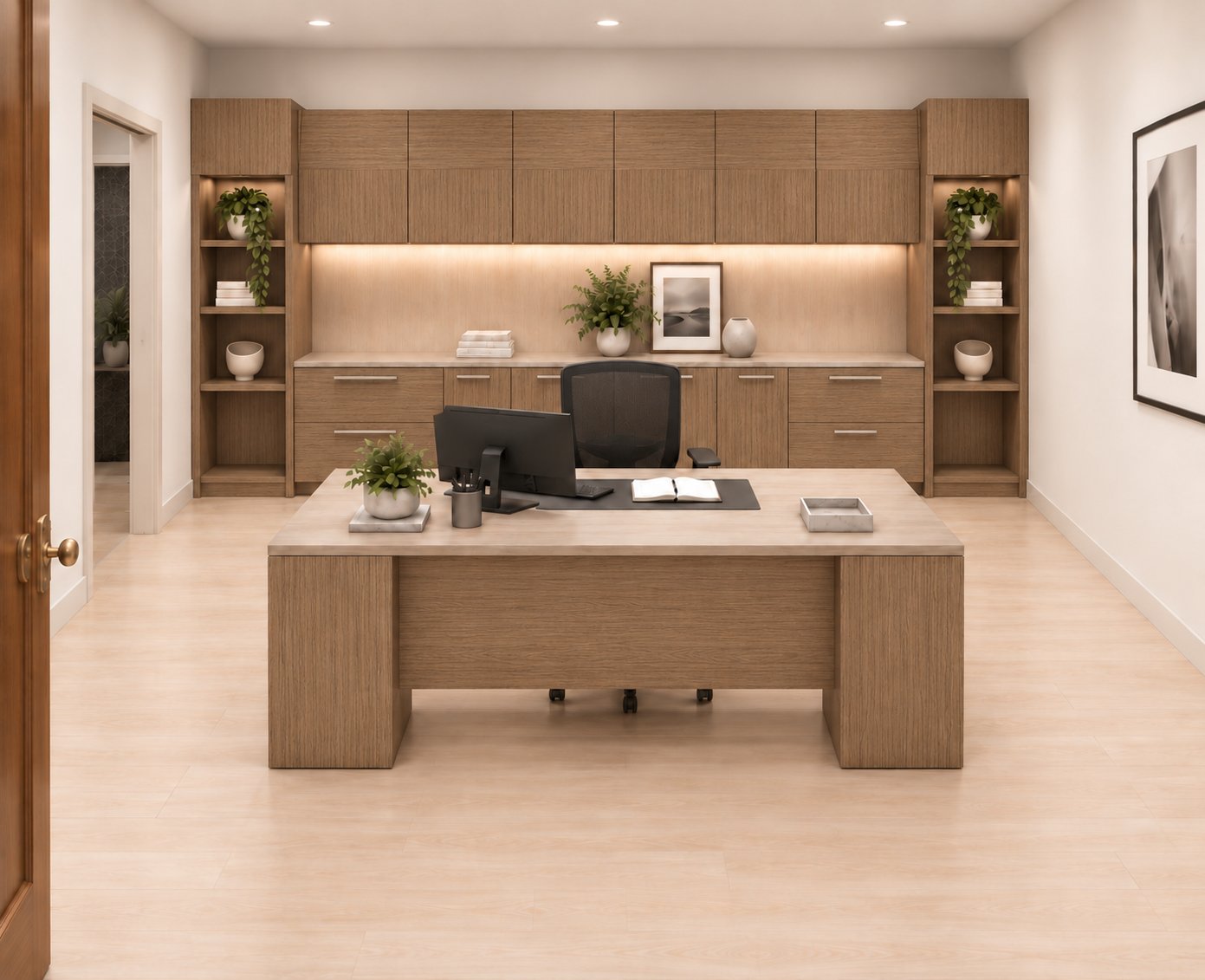
Executive styles often feature a prominent desk, substantial surfaces, and coordinated casegoods. Contemporary styles tend toward simpler lines and a lighter visual profile. These are broad design directions, not fixed specifications. A traditional wood desk, for example, can anchor an executive suite, while a streamlined desk may suit a compact office with limited visual space.
Custom or made-to-order furniture can address a particular footprint, finish, or configuration. Available choices depend on the manufacturer and product specifications. Start by identifying the office’s functions and desk placement, then coordinate finishes and storage with those needs. This keeps appearance connected to practical use.
There is no single best executive furniture brand for every Beverly Hills office. Compare options by dimensions, materials, configuration, and how well they support the work. A brand with a suitable desk but no matching storage may be a weaker fit than a coordinated selection that meets the room’s needs. Product names alone don’t establish suitability.
Used and refurbished furniture is a separate resale category. This guide focuses on selecting a new commercial executive workspace and how its style and layout can support daily work. Assess the furniture as a group: desk scale, chair profile, storage capacity, and finishes should work together rather than compete for attention.
Color and material choices shape how the office feels to visitors and employees. Wood finishes can add visual weight, while neutral surfaces can keep a contemporary workspace restrained. Coordinate the desk, bookcase, and guest seating through a consistent palette. Repeating one finish across the desk and storage, for example, creates continuity without requiring identical designs.
Position the desk with a window to the side, rather than directly behind the screen, to use daylight while reducing glare. This keeps the window in the workspace without placing direct light behind the display. Treat desk position as one planning factor, then assess circulation, visitor seating, and storage access before finalizing the layout.
Desks, chairs, bookcases, and storage
A coordinated selection connects the desk, chairs, and storage to actual office tasks. Reviewing the pieces together helps prevent clashing finishes, duplicated functions, and crowded work areas.
Desk Options
Desk selection starts with the equipment and paperwork used during a typical workday. A desk around 120 centimeters wide can accommodate a laptop and notebook, while at least 160 centimeters is suggested for dual monitors, paperwork, and room to spread out. These examples help establish a useful starting point, but the room layout and work requirements determine the final fit.
For tidier cable routing, a desk with a cable tray, grommets, or a back panel can help keep cables organized. An L-shaped configuration can also separate computer work from document review. Compare the work surface, storage needs, and room access together instead of choosing by appearance alone.
Office Seating
Choose chairs based on who uses the desk and how the seating fits the work area. Executive, task, and guest chairs serve different roles. A desk used for focused computer work, for example, calls for a different seating arrangement from an office that regularly hosts visitors.
Assess the chair alongside desk height and available clearance. Make sure it can move into position without blocking a cabinet or doorway. In a shared executive office, align the primary chair with the workstation and position guest seating for conversation without restricting access to storage.
Storage Pieces
Bookcases and file cabinets organize materials that should be accessible near the desk. A bookcase suits reference materials and display items; a file cabinet supports document organization. Choose according to what needs storing, how often staff need it, and whether the office also needs open display space.
Keep frequently used files within convenient reach and reserve less accessible storage for records used less often. A file cabinet beside the desk, for example, can support routine document handling, while a bookcase near a meeting area can hold reference materials. Keep doors, drawers, and walkways clear in the planned layout.
Coordinate finishes across the desk, chair, bookcase, and file cabinet for a consistent workspace. Review each piece’s role, dimensions, surface area, and position together. This is especially useful when choosing an L-shaped desk with a separate cabinet, since both pieces affect circulation and access to storage.
Before final selection, map the desk, chair movement, and storage locations against the room plan. Check that cables have a routing option and that cabinets remain accessible after placement. For a coordinated commercial furniture selection, explore office furniture planning as part of the project process.
When planning the pieces as a pair, review their footprint and surrounding access before settling on a layout. The Karri Desk Set is described as a two-piece desk set. Use that description as a prompt to consider how the desk and accompanying piece will work together, rather than assuming the set suits the room automatically. Make sure daily tasks, storage access, and movement remain practical in the intended arrangement.
Product pricing and discounts
Furniture pricing depends on the pieces selected and project scope. A desk-only purchase differs from a coordinated office plan that includes seating, storage, delivery, and installation. Commercial furniture pricing depends on the project, and a quote is provided after a quote request. Product selection, materials, quantities, and project requirements shape the cost.
Evaluate the furniture specification separately from any discount. A lower displayed price matters only if the desk, chair, storage, and finish meet the intended requirements. For example, compare desk configurations by usable surface, storage arrangement, and included components, not just by the discount label. This gives you a clearer basis for comparing options.
Discount language can describe different arrangements, such as a reduced price on selected items or a promotion tied to a particular set. Read the terms alongside the product details. Check which pieces the offer covers, whether the configuration matches the planned office, and whether delivery or installation is included in the project quote. These distinctions matter to the overall purchasing decision.
For Beverly Hills executive office furniture, build the selection before judging its price. Identify the required desk configuration, seating, and storage, then align those choices with the room plan. A discount on a desk doesn’t account for the cost of adding a compatible chair or file cabinet. Considering the complete requirement helps prevent a narrow offer from driving an incomplete purchase.
Scope: Compare the same furniture categories and quantities.
Specifications: Match finishes, dimensions, and configuration.
Included work: Review delivery and installation in the project scope.
Offer terms: Identify covered items and any stated conditions.
A structured comparison distinguishes product value from short-term savings. An executive desk with a suitable layout, for example, may support daily work better than a discounted desk that requires extra storage. Consider how each option serves the office, including document handling, visitor seating, and equipment placement. The least expensive line item may not be the most suitable overall choice.
Prepare the same specification for every option under review. Include furniture categories, preferred configuration, finishes, and room requirements, then compare quotes against that shared scope. This reduces confusion when an offer includes a different combination of pieces and gives decision-makers a practical record of what the purchase covers.
Discounts should inform the decision, not replace it. A suitable offer must align with the furniture specification, project scope, and operating needs. Once those elements are clear, the quote provides the relevant cost basis for the planned selection.
These listed prices provide a starting point, not a complete project comparison. Check each set’s configuration, finish, and included pieces against the same office needs, and verify whether delivery or installation is included in the quote. A lower set price may still leave additional furniture or services to account for, so assess the full scope before choosing.
Bookcases and file cabinets
Bookcases and file cabinets serve different storage roles in an executive office. A bookcase keeps selected reference materials visible, while a file cabinet organizes documents. Plan each piece around what staff need to retrieve, where they work, and how visitors use the room. Materials used during meetings, for example, may belong near the meeting area.
Start by grouping the materials the office needs to store. Separate active files, reference books, and display items, then assign each group a suitable location. Keep active files close to the work area for convenient access. Reference books can go on a bookcase, while visible shelves can display selected items without taking over the desk.
Consider cabinet placement alongside the desk configuration. The Skylar Desk Set includes an L-shaped desk and a filing cabinet, offering an example of combining work surfaces with file storage. Its layout can inform your selection, but the room plan still needs to allow access to drawers and clear movement around the desk.
Bookcase placement also affects how an office functions. A unit beside the desk keeps reference materials close; one near visitor seating can hold materials used in discussions. Keep frequently accessed items within reach and reserve higher or less accessible shelves for materials used less often. A balanced arrangement makes retrieval easier.
Active records: Position routine files near the desk.
Reference materials: Group books and binders by work topic.
Display items: Keep selected objects separate from working documents.
Visitor materials: Place meeting references near the relevant seating area.
Choose cabinets according to how documents are handled. A file cabinet supports organized records, while open shelving suits items staff need to see quickly. A team handling recurring paperwork, for example, may prioritize file access, while an executive with presentation materials may need both organized files and visible reference storage.
Check the full layout before finalizing storage. Make sure the file cabinet doesn’t interrupt the route between the desk and door, and that bookcase placement doesn’t block access to seating or other work areas. This review helps prevent useful storage from ending up somewhere difficult to reach.
Finish coordination matters, too. A bookcase and file cabinet that complement the desk can create a consistent office appearance without requiring every piece to match exactly. Compare color, material, and visual weight across the main furniture pieces. A coordinated selection supports a clear workspace while giving each storage item a defined purpose.
Choosing a set and measuring for fit
A furniture professional needs the room plan, dimensions, work requirements, and preferred configuration. Include door and window positions, the executive’s equipment, visitor seating needs, and storage priorities. These details help connect the furniture selection to how the Beverly Hills office operates.
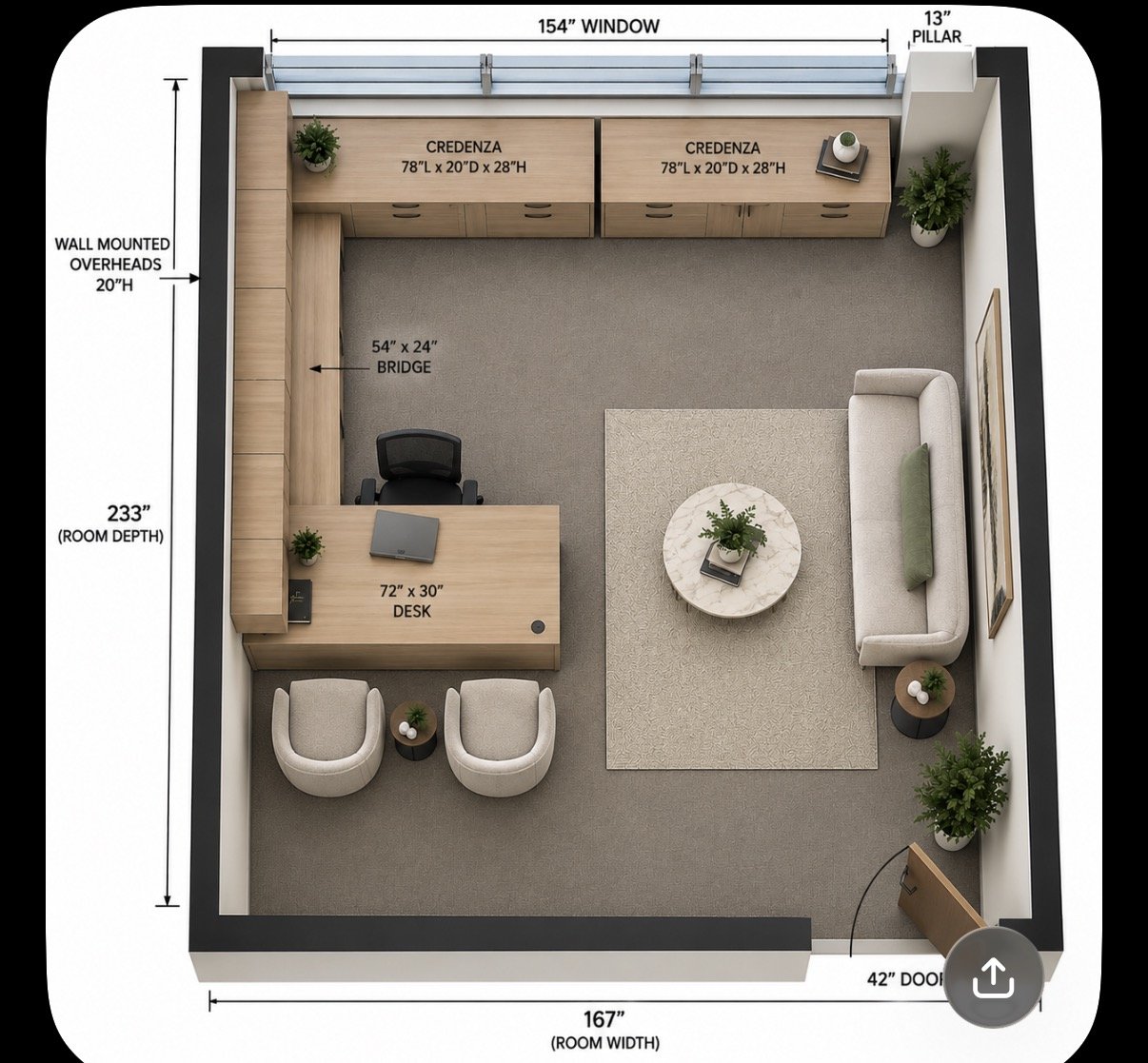
Start with the room’s usable dimensions, not its total floor area. Note fixed features such as windows, doors, and built-in elements, then map the intended desk and storage positions. A professional can use the plan to assess whether each piece fits and whether people can move through the workspace without obstruction.
For home office planning, roughly 30 inches is recommended for main traffic paths. Use that figure as a planning reference when assessing routes between the desk, doorway, and visitor seating. An L-shaped desk, for example, may fit one wall but narrow the path to a file cabinet. Layout choices should account for both furniture placement and circulation.
Desk height also affects how the workspace functions. A standard desk height is around 73 to 75 centimeters and is comfortable for most chairs. The selected desk and chair should be considered together, rather than as separate purchases. That comparison helps the professional evaluate a coherent setup for the intended user.
The Internal Revenue Service says to consider ergonomic flexibility, efficient use of space, work environment quality, and cost efficiency when choosing executive office furniture. Apply those criteria to the project brief. For instance, a layout that supports daily computer work and visitor meetings may require different furniture priorities from a private workspace focused on document review.
Room plan: Share usable dimensions and fixed features.
Work needs: Identify equipment, paperwork, and meeting requirements.
Furniture scope: List desk, chair, and storage needs.
Access: Account for main paths and cabinet access.
Use those details to compare complete layouts, not isolated pieces. A desk may fit against a wall yet leave too little room for seating or storage access. A professional selection considers the entire arrangement and how each item supports the office’s work. This gives you a clearer basis for choosing furniture that fits both the room and its daily demands.
Share the room plan and operating requirements to begin a layout review. Plan your office furniture layout around the space, work patterns, and furniture requirements.
3S Interior Design
3S Interior Design helps businesses plan and furnish executive workspaces through coordinated furniture selection and project delivery. Its commercial offerings include private office desks and casegoods, ergonomic office seating, workstations and cubicles, and conference room furniture.
Turn to 3S Interior Design when desk, seating, and room-layout decisions need to work together. The team manages projects from consultation and space planning through product selection, procurement, delivery, and professional installation. Sharing the room plan, work requirements, and preferred furniture scope helps shape a selection around the office’s operational needs.
For an executive office project in Beverly Hills, contact 3S Interior Design to discuss the workspace requirements and next steps.
Set the Next Office Project in Motion
A Beverly Hills executive office furniture project is easier to manage when decisions follow a clear sequence. Start with the business priorities the office must support, then align stakeholders on what the finished workspace needs to accomplish. That direction gives the project a practical basis for evaluating options and moving from planning to procurement.
Before starting, bring together the room plan, operational requirements, and the people responsible for approving the selection. Clear priorities help keep later decisions focused and make it easier to coordinate furniture choices with the broader workspace plan. 3S Interior Design can support that process through consultation, space planning, product selection, procurement, delivery, and installation.
Share your project requirements and discuss the next step with Contact 3S Interior Design. A well-planned workspace starts with a clear brief and a coordinated path forward.
Frequently Asked Questions
How does a furniture professional match an executive desk to the work being done?
A furniture professional starts with the tasks, equipment, and people using the office. An executive who regularly meets clients, for example, may need a desk arrangement that accommodates paperwork and visitor interaction. A workspace focused on computer-based work has different priorities. The professional then considers the room plan and coordinates the desk with seating and storage, so the selected setup supports daily operations.
What Beverly Hills furniture stores specialize in executive office desks and chairs?
For commercial executive office furniture in Beverly Hills, 3S Interior Design supplies businesses with office furniture and workspace solutions. Its offerings include private office desks and casegoods, plus ergonomic office seating. The company serves commercial customers, not individual retail shoppers. Businesses planning an office can work with 3S Interior Design on product selection and project coordination, rather than treating the purchase as a consumer furniture-store transaction.
What are the prices of executive office furniture in Beverly Hills?
Commercial office furniture pricing depends on the project, and a quote is provided after a quote request. Selection, materials, quantities, and project scope affect the cost. For a useful estimate, define whether the project covers one executive office or a broader workspace, then identify the required furniture categories. A quote based on that scope gives decision-makers a clearer view of the planned purchase than a standalone desk price.
What are the best executive office furniture brands available in Beverly Hills?
There is no single best brand for every Beverly Hills office. Compare brands by the dimensions, materials, configurations, storage, and work requirements they support.
How do executive office furniture stores in Beverly Hills compare on selection and price?
Compare suppliers by how well their selection meets your desk, seating, storage, and room requirements. Prices depend on products, materials, quantities, and project scope, and are provided after a quote request.
Comments