


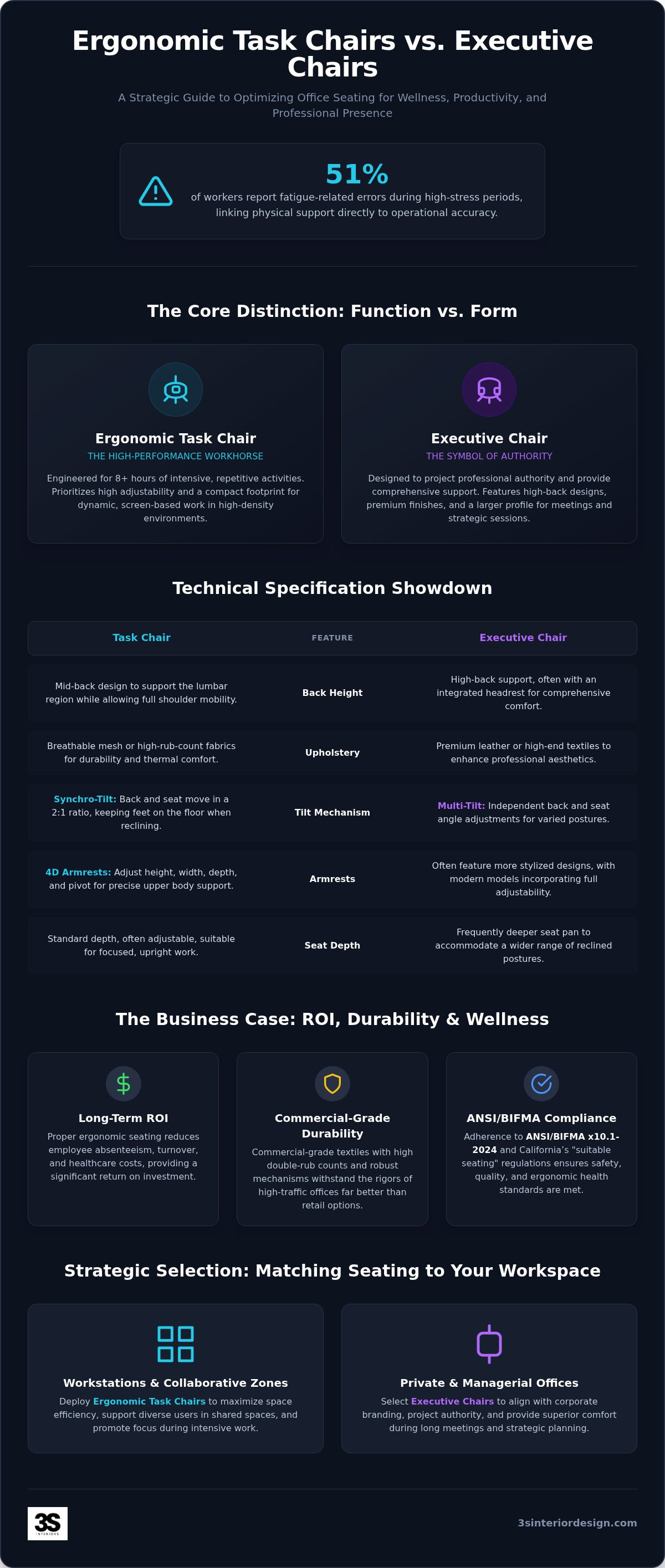
Ergonomic Task Chairs vs. Executive Chairs: A 2026 Commercial Procurement Guide
51% of workers report fatigue-related errors during high-stress periods, a statistic that underscores the direct link between physical support and operational accuracy. For facility managers in Los Angeles and Irvine, selecting the right seating is no longer just a matter of aesthetics; it's a critical component of risk mitigation and talent retention. You likely recognize that discomfort leads to high turnover and wasted budgets, yet the distinction between ergonomic task chairs vs executive chairs often remains blurred during the procurement process.
This guide provides a pragmatic framework to help you optimize your Southern California office for both employee wellness and professional prestige. We'll move past the marketing fluff to examine the updated ANSI/BIFMA x10.1-2024 standards and California’s specific "suitable seating" regulations. You will gain a clear understanding of how to align chair mechanisms with operational durations, ensuring your furniture meets commercial-grade durability standards while supporting the functional success of every department. By the end of this analysis, you'll have the technical specifications needed to make a secure, long-term investment in your firm's infrastructure.
Table of Contents
Defining the Standard: Ergonomic Task Chairs vs. Executive Chairs
The distinction in commercial seating is often misunderstood as a simple choice between comfort and status. In reality, the technical differences between ergonomic task chairs vs executive chairs reflect specific engineering choices for distinct operational roles. While the History of the Office Chair shows a clear evolution from basic stools to specialized tools, the 2026 corporate environment requires a more methodical approach to procurement. Task chairs prioritize a compact footprint and high adjustability for repetitive screen-based work. Executive chairs utilize high-back support and premium finishes to project professional authority. The "status vs. science" divide is narrowing because modern executive models now integrate the same high-performance mechanisms found in task seating, ensuring that prestige does not come at the cost of orthopedic health.
Key technical differences include:
Back Height: Task chairs typically feature mid-back designs to support the lumbar region while allowing shoulder mobility. Executive chairs offer high-back support that often includes an integrated headrest.
Seat Depth: Executive models frequently provide a deeper seat pan, accommodating a wider range of reclined postures.
Upholstery: Task seating favors breathable mesh or high-rub-count fabrics. Executive options prioritize leather or premium textiles that enhance the visual profile of the workspace.
The Role of Task Seating in Modern Workstations
These units are engineered for eight or more hours of intensive, repetitive activities. They are the standard for commercial workstations and cubicles where space efficiency is paramount. Modern task chairs utilize synchronous tilt mechanisms and 4D armrests to facilitate dynamic movement. This adjustability is vital for multi-user environments where different employees may share the same workstation across different shifts. The compact footprint ensures that high-density office layouts remain functional without sacrificing user comfort.
Executive Seating: Beyond the Corner Office
Executive chairs provide essential support for varied postures during long-duration meetings and strategic planning sessions. These chairs often feature upholstered leather or premium textiles that align with corporate branding and the aesthetics of private office desks and casegoods. While they offer a distinct professional presence, modern versions must still adhere to ANSI/BIFMA x10.1-2024 standards to ensure long-term physical health. Choosing an executive model today involves balancing high-back aesthetics with the mechanical precision required for modern ergonomic compliance.
Technical Comparison: Adjustability, Materials, and Ergonomics
Selecting the appropriate seating infrastructure requires a deep dive into the mechanical specifications that define the user experience. When evaluating ergonomic task chairs vs executive chairs, the primary differentiator often lies in the tilt mechanism. Synchro-tilt mechanisms move the backrest and seat pan in a fixed 2:1 ratio. This allows the user to recline while keeping their feet flat on the floor; it maintains proper circulation during long shifts. Multi-tilt mechanisms, frequently found in executive models, allow for independent back and seat angle adjustments. This flexibility is ideal for varied postures during long strategic sessions.
Surface materials also dictate long-term operational success. Mesh surfaces provide superior breathability. They prevent heat buildup during intensive eight-hour shifts. Conversely, upholstered executive chairs offer thermal comfort and a more substantial aesthetic profile. To ensure durability, facility managers should look for commercial-grade textiles with high double-rub counts. These materials withstand the rigors of high-traffic Los Angeles offices far better than standard retail options.
Armrest Configurations: 4D armrests are the 2026 standard for ergonomic task chairs. They offer height, width, depth, and pivot adjustments to support the upper body during typing.
Lumbar Support Systems: Active tension systems allow users to dial in specific pressure. Passive systems use the chair's natural frame contour to provide support without manual intervention.
Adjustability Benchmarks for Commercial Use
A diverse workforce requires seating that accommodates various body types. Seat height and depth ranges must be broad enough to support the 5th to 95th percentile of the North American population. This alignment follows the ANSI/BIFMA x10.1-2024 standards. Tension control is equally critical. It ensures that the recline resistance matches the user's weight perfectly. In shared environments like collaborative zones, "set-it-and-forget-it" features allow for quick transitions between users without complex recalibration. If you're managing a large-scale procurement project, consulting with a workspace strategist can help ensure these technical benchmarks are met across your entire inventory.
Material Science and Longevity
Longevity is a product of high-quality internal components. High-density molded foam retains its shape and support for years. Standard cut foam often degrades and "bottoms out" within months of heavy use. Sustainability is also a key procurement factor in 2026. Forward-thinking organizations prioritize low-VOC materials and seating with high recyclable content to meet environmental mandates. Whether choosing top-grain leather for an executive suite or recycled polyester for a task-oriented workstation, the focus remains on commercial-grade durability and professional standards.
The Business Case: ROI, Durability, and Employee Wellness
Procurement decisions must prioritize long-term operational stability over initial capital expenditure. When comparing ergonomic task chairs vs executive chairs, the return on investment (ROI) is measured through mechanical longevity and the mitigation of professional risk. While an entry-level model might appear cost-effective, the replacement cycle for non-commercial furniture often occurs within eighteen months; this effectively doubles the total cost of ownership. Commercial-grade certification, specifically the ANSI/BIFMA x10.1-2024 standard, is non-negotiable for Los Angeles firms. These standards ensure the chair withstands the rigors of a standard work week without structural failure or loss of support. Warranty structures in commercial contracts should ideally cover components like pneumatic cylinders and tilt mechanisms for five to ten years, protecting your capital investment against mechanical fatigue.
Seating as a Wellness Strategy
Proper pelvic support is a primary defense against musculoskeletal disorders (MSDs), which remain the leading cause of work-related disability. In Southern California, employers must also consider the legal implications of California’s Industrial Welfare Commission (IWC) wage orders. These regulations require "suitable seating" for employees, and non-compliance can result in penalties of $100 per employee per pay period for initial violations. Beyond legal compliance, high-quality seating has a significant psychological impact on employee retention. It signals a corporate commitment to staff well-being, which is vital in competitive markets like Santa Monica and Irvine. High-performance seating reduces long-term healthcare costs by preventing the micro-strains that lead to chronic musculoskeletal disorders.
Durability in High-Traffic Environments
Operations in logistics hubs like Compton or Long Beach often require seating that supports 24/7 use across multiple shifts. Standard office chairs are rarely engineered for this level of intensity. High-traffic environments demand superior cylinder and caster quality to prevent mechanical failure and floor damage. A failed caster does more than disable a chair; it can permanently score expensive flooring, leading to additional facility repair costs. We utilize a manufacturer-agnostic planning approach to identify the most durable options for your specific budget. This strategy ensures you aren't paying for a brand name when a more robust, lesser-known commercial model offers better structural integrity. By focusing on technical specifications rather than aesthetic trends, you ensure your furniture remains a functional asset for years to come.
Strategic Selection: Matching Seating to Your Workspace Layout
Effective floor planning requires more than just placing furniture; it demands a functional alignment between the user’s role and the surrounding environment. When deciding between ergonomic task chairs vs executive chairs for specific zones, facility managers must evaluate the primary activity performed in that space. Open-plan benching and high-density workstations benefit from the slim profile of task chairs, which maximize floor space without compromising individual support. In contrast, boardrooms and managerial suites require executive models that provide a visual anchor for the room while accommodating the varied postures of long-duration meetings. Balancing these choices ensures aesthetic consistency across the entire facility, maintaining a cohesive brand identity from the reception area to the executive floor.
Integration with height-adjustable tables is another critical factor in a modern office. Task chairs with a wide range of pneumatic travel are essential for users who transition frequently between sitting and standing. If your layout includes sit-stand desks, the chair’s base diameter and caster type must allow for easy movement within the workstation’s footprint. For organizations in Los Angeles looking to optimize these configurations, 3S Interior Design provides expert space planning services to ensure every seating choice enhances the overall workflow.
Seating for Collaborative and Conference Spaces
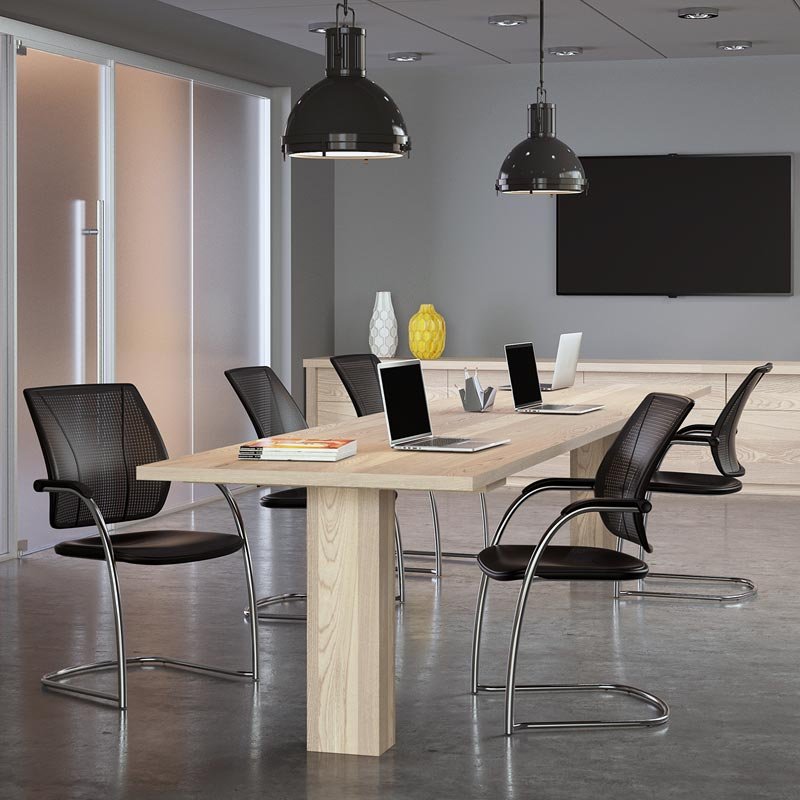
The modern conference room is shifting toward "light" task chairs that offer flexible support without the bulk of traditional seating. These models are particularly effective in Santa Monica and Culver City tech suites, where managing chair density is vital for maintaining an open, collaborative feel. For high-stakes boardrooms, executive conference chairs remain the standard. They combine a high-back status profile with the mechanical comfort needed for three-hour strategy sessions. Choosing the right density ensures that meeting rooms don't feel overcrowded while providing every participant with adequate personal space. This methodical approach to density prevents the common mistake of purchasing furniture that is too large for the room’s dimensions.
Ergonomics in the Private Office
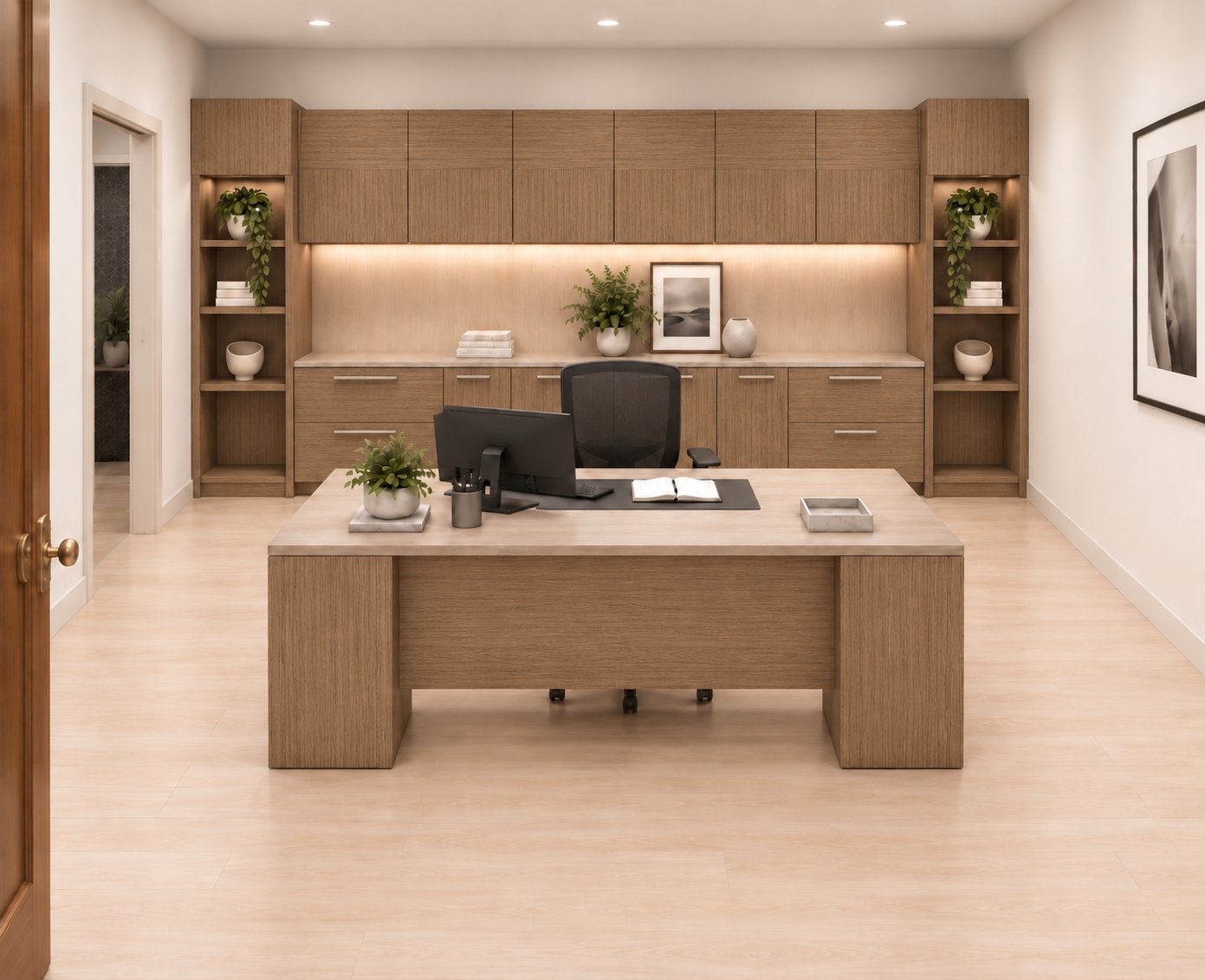
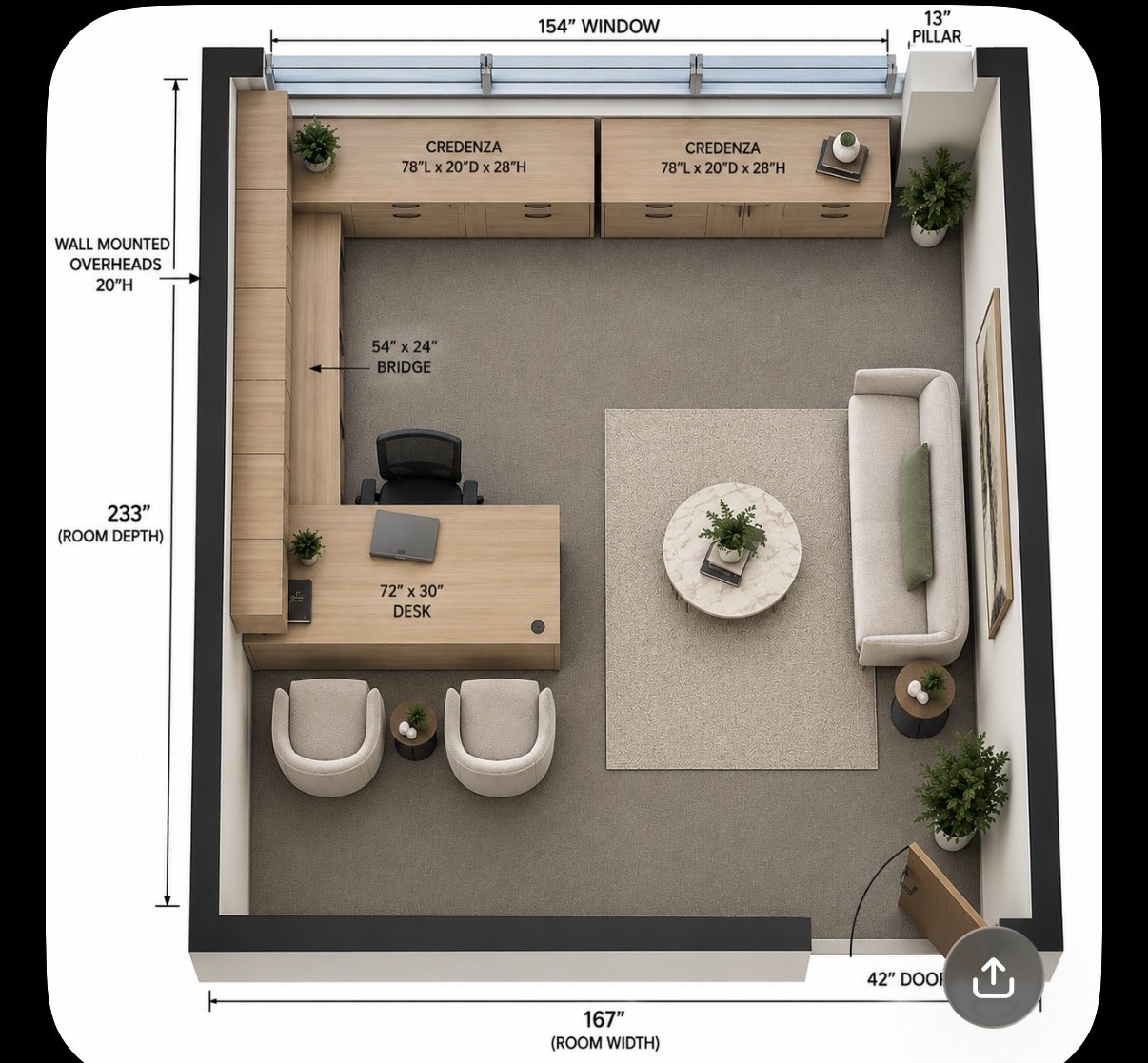
In a private setting, the executive chair must coordinate with premium casegoods and storage systems to project a unified professional image. Space planning is essential here to ensure proper clearance for high-back chairs, especially when positioned behind large executive desks. Guest seating should also be selected with care; it must maintain the professional tone of the room without competing with the primary chair’s visual authority. By carefully weighing the trade-offs of ergonomic task chairs vs executive chairs, you can tailor the ergonomics to the specific prestige of the room. This ensures that your managerial suites remain both functional assets and impressive environments for high-level consultation.
Procurement and Installation for Southern California Businesses
Procuring commercial furniture in Southern California involves navigating a complex web of logistical challenges. Once you've analyzed the technical trade-offs between ergonomic task chairs vs executive chairs, the focus must shift to physical implementation. High-density business districts like Century City and Beverly Hills present unique obstacles, including strict loading dock schedules and limited freight elevator access. We manage these details through a methodical coordination process; this ensures your inventory arrives on schedule without interfering with daily operations. For large corporate campuses, managing the "final mile" requires precise staging and sequencing. This prevents the bottlenecking often associated with high-volume furniture deliveries and ensures a smooth transition between procurement and active use.
Turnkey Project Management for Furniture
Our turnkey approach simplifies the procurement process for facilities managers by handling every phase of the project timeline. We coordinate directly with space planners to ensure that every selected chair fits the intended workstation or private office dimensions exactly. Unlike "flat-pack" retail alternatives that require on-site assembly by your internal staff, our professional installation services include full assembly and strategic placement. This eliminates the risk of mechanical failure or safety hazards caused by improper assembly. Our teams arrive with the specialized tools and expertise needed to handle commercial-grade seating, ensuring every unit meets the structural standards established during the initial planning phase.
Local Expertise in Southern California
We serve a diverse range of professional sectors, from high-growth Irvine tech firms to established Burbank media studios. Each market requires a tailored delivery strategy to minimize business disruption. Strategic planning allows us to execute installations during off-peak hours or in phased sequences that keep your team productive throughout the transition. Post-installation support is a critical final step in our process. We don't simply drop off furniture; we ensure every chair is correctly adjusted for its specific user. This maximizes the ergonomic benefits and wellness metrics discussed in previous sections. This end-to-end service model builds lasting professional relationships and ensures operational stability for your firm.
Contact 3S Interior Design for a comprehensive seating consultation to begin optimizing your workspace infrastructure.
Secure Your Workspace Infrastructure for 2026
Selecting between ergonomic task chairs vs executive chairs is a strategic decision that impacts both employee wellness and corporate prestige. A methodical procurement process ensures that seating mechanisms align with specific job functions while meeting the technical requirements of the ANSI/BIFMA x10.1-2024 standards. By prioritizing commercial-grade durability, you protect your capital investment and support the long-term operational success of your firm. It's not just about aesthetics; it's about building a functional environment that reduces absenteeism and promotes retention.
3S Interior Design provides the specialized expertise needed to manage these complex logistical details. Our end-to-end turnkey service handles everything from initial space planning to professional installation across Southern California. We offer a curated selection of high-performance seating tailored to the unique demands of the Los Angeles and Irvine markets. Our team ensures that your furniture remains a reliable asset rather than a recurring expense. Schedule a Consultation for Your Southern California Workspace to begin your transition to a more efficient office layout. We look forward to partnering with you on your next project.
Frequently Asked Questions
What is the primary difference between a task chair and an executive chair?
Task chairs are engineered for repetitive, high-focus work with a compact footprint and high adjustability. Executive chairs prioritize professional presence and high-back support, often utilizing premium materials like leather or polished aluminum. While both can be ergonomic, the choice depends on the specific job function and the desired aesthetic for the workspace. Task chairs are the standard for open-plan workstations, whereas executive models are typically reserved for private suites.
Are executive chairs actually ergonomic for 8 hours of work?
High-quality executive chairs are ergonomic for long-duration use if they meet the ANSI/BIFMA x10.1-2024 standards. Many modern models now incorporate the same synchro-tilt mechanisms and lumbar support found in high-performance task chairs. However, some traditional designs prioritize aesthetics over movement. When comparing ergonomic task chairs vs executive chairs for 8-hour shifts, ensure the selected model offers dynamic support and breathable materials to maintain user comfort throughout the day.
Why should a business prioritize BIFMA-certified seating?
BIFMA certification ensures that seating meets rigorous safety, durability, and structural standards for commercial environments. This testing simulates years of heavy use, including drop tests and stability assessments. Prioritizing certified furniture mitigates professional risk and protects your capital investment. It also helps Southern California employers demonstrate compliance with "suitable seating" regulations. Using non-certified retail furniture often leads to premature mechanical failure and higher long-term replacement costs for your firm.
How often should commercial office chairs be replaced?
Commercial-grade office chairs typically require replacement every seven to ten years, depending on the intensity of use. Shift-based operations in logistics hubs may see shorter lifecycles due to 24/7 occupancy. Indicators of necessary replacement include pneumatic cylinder failure, worn upholstery, or a loss of structural tension in the backrest. Regular maintenance and selecting models with five-year to ten-year warranties can extend the operational life of your seating inventory and improve your ROI.
Can task chairs be used in a professional boardroom setting?
Task chairs are increasingly used in modern boardrooms to promote active participation and maximize seating density. Their compact design allows for more participants around a conference table without overcrowding the room. While they lack the high-back status of executive models, they offer superior adjustability for varied meeting lengths. Selecting a unified color palette ensures that task seating maintains a professional tone that aligns with your corporate branding and boardroom aesthetics.
What are the most important ergonomic adjustments for a desk chair?
The most critical adjustments include seat height, seat depth, and adjustable lumbar support. These features allow the user to maintain feet-flat posture while supporting the natural curve of the spine. 4D armrests are also essential for upper body support during typing tasks. When evaluating ergonomic task chairs vs executive chairs, look for tension control mechanisms. This feature allows the chair to respond accurately to the user’s weight, preventing the "bottoming out" effect.
How does 3S Interior Design handle large-scale chair installations in Los Angeles?
We utilize a turnkey project management model that handles everything from initial consultation to final staging. Our teams coordinate with building managers in high-density areas like Century City to navigate loading dock and freight elevator restrictions. We sequence deliveries to minimize business disruption, often performing installations during off-peak hours. Post-installation, we provide user-specific adjustments to ensure every chair is correctly calibrated, maximizing the ergonomic benefits for your entire workforce.
Do executive chairs require more space in an office layout?
Executive chairs generally require a larger footprint due to their wider seat pans and high-back frames. They often have a larger base diameter to ensure stability during deep recline. Space planning services are vital here to ensure proper clearance behind executive desks and around conference tables. Failing to account for this extra bulk can lead to restricted movement and damage to walls or premium casegoods. Always verify the chair's dimensions against your floor plan before procurement.
Comments